
Philippians 1 Explained: 4 Ways to Live a Life Worthy of the Gospel
Mar 10, 2026
7 min read
The book of Philippians is one of the most personal letters the apostle Paul ever wrote. It reads less like a theological essay and more like a heartfelt message from a spiritual father to people he deeply loves.
Before we jump into the famous lines at the end of chapter one, it helps to understand the setting.
Paul planted the church in Philippi around 51 AD, making it the first church established in Europe. Philippi itself was a unique city—one of the only places outside of Italy that held the official status of a Roman colony. That meant Roman pride, Roman customs, and Roman culture were everywhere. And yet, right in the middle of that environment, God planted a church.
The story begins in Acts 16, and the early members of the Philippian church were a fascinating group:
- Lydia, a wealthy businesswoman who likely helped financially support the church.
- A demon-possessed slave girl who experienced freedom through Jesus.
- A Roman jailer whose life was transformed after witnessing God’s power.
Different backgrounds. Different stories. One Savior.
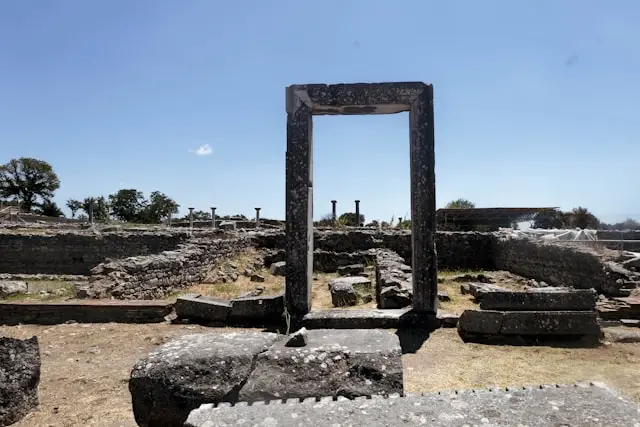
Now fast forward a few years. When Paul writes this letter, he’s not on a beach somewhere reflecting on ministry success. He’s writing from prison—most likely the Mamertine Prison in Rome, one of the harshest jails in the ancient world. And yet the tone of the letter is remarkably joyful.
Right away, Paul expresses gratitude for the believers in Philippi:
“I thank my God every time I remember you. I always pray with joy… because of your partnership in the gospel from the first day until now.”(Philippians 1:3–5) Paul doesn’t see their faith as something passive. He calls it a partnership. They weren’t just believers; they were co-workers in the mission of the gospel. And he’s confident in something powerful:
“He who began a good work in you will carry it on to completion until the day of Christ Jesus.” (Philippians 1:6)
Despite the hardships. Despite the cultural resistance. Despite his own imprisonment—Paul is confident God is still working. In fact, he explains that even his imprisonment is advancing the gospel. The entire imperial guard has heard about Jesus because Paul is in chains. Other believers are preaching more boldly because they’ve seen Paul’s courage. Even when some people preach Christ with selfish motives, Paul still rejoices. Why?
Because Jesus is being proclaimed.
That’s Paul’s perspective. His life isn’t centered on comfort—it’s centered on Christ. He even says one of the most famous lines in the New Testament: “For to me, living is Christ and dying is gain.” (Philippians 1:21) In other words, whether he lives or dies, Jesus wins. But then Paul turns from reflection to instruction. In Philippians 1:27–30, he gives a challenge that is just as relevant today as it was two thousand years ago.
If we boiled his message down into four simple phrases, it might look like this:
Because Jesus is being proclaimed.
Act Right
Paul begins with this instruction: “Conduct yourselves in a manner worthy of the gospel of Christ.” (Philippians 1:27) In the Roman world, the phrase “conduct yourselves” carried the idea of living as a good citizen. Paul is essentially saying: Live like citizens of heaven. Your behavior matters. Your actions matter. The Bible never suggests that how we live is irrelevant. In fact, followers of Jesus are called to a higher way of life.
The gospel is good news—but it also calls us into a new way of living.
1
Stay Tight
Paul continues:
“Standing firm…”
Faithfulness isn’t always flashy. Sometimes it simply means not moving. Don’t drift. Don’t grow lazy. Don’t get tired of doing good. Many people love the excitement of the “first day” of faith. But the fullness of following Jesus isn’t found in the beginning, it’s found in long-term commitment. Think about something like a 60-year marriage. You can’t experience the beauty of that kind of relationship in a moment. It takes years of choosing each other. In the same way, the richness of life with Jesus grows through steady faithfulness over time.
2
Unite
Paul then describes what kingdom citizenship looks like in community: “Standing firm in one spirit, with one mind, contending side by side for the faith of the gospel.” (Philippians 1:27)
Notice the language: one spirit, one mind, side by side.
Following Jesus was never meant to be a solo mission. In the movies, heroes often work alone—Ethan Hunt, Jason Bourne, John Wick, Jack Reacher. But the kingdom of God doesn’t operate like that. You are not the church by yourself. The church is a team effort. Paul says believers should be in the trenches together, fighting for the faith side by side. Biblical unity isn’t optional. It’s part of what it means to follow Jesus.
3
No Fright
Finally, Paul says: “Do not be intimidated in any way by your opponents.” (Philippians 1:28)
Resistance will come. Pressure will come. Opposition will come. But Paul says something surprising: that resistance is actually a sign. It’s a sign that the gospel is advancing. A sign that faith is real. A sign that God is at work.
Then Paul adds something even more shocking: “It has been granted to you not only to believe in Christ but also to suffer for him.” (Philippians 1:29) In other words, suffering for Jesus isn’t a punishment—it’s a privilege. That doesn’t mean suffering is easy. But it does mean it has purpose. So don’t suffer your suffering. Let it shape you, strengthen you, and remind you who you belong to.
4
ᐧ
Paul’s message to the Philippians is simple but powerful:
- Live lives worthy of the gospel.
- Stand firm in your faith.
- Fight for unity.
- Don’t be afraid.
Because living a life that reflects the good news of our good God will always look like faithful people working together with courage.
ᐧ
FAQ's
What does Philippians 1:27 mean?
Philippians 1:27 calls believers to “conduct yourselves in a manner worthy of the gospel of Christ.” Paul is urging Christians to live as citizens of God’s kingdom. Our actions, attitudes, and relationships should reflect the good news of Jesus. Living worthy of the gospel means standing firm in faith, pursuing unity with other believers, and remaining faithful even when facing opposition.
What does “to live is Christ and to die is gain” mean?
In Philippians 1:21, Paul says, “For to me, to live is Christ and to die is gain.” He means that his entire life is centered on Jesus. As long as he lives, he will continue serving Christ and sharing the gospel. But if he dies, he gains something even greater—being with Christ forever. Either way, Paul sees his life as belonging fully to Jesus.
Why was Paul in prison when he wrote Philippians?
Paul wrote the letter to the Philippians while imprisoned in Rome. Despite being in chains, he explains that his situation actually helped spread the gospel. Members of the imperial guard heard about Jesus, and other believers became more bold in sharing their faith because of Paul’s courage.
What is the main message of Philippians 1?
The main message of Philippians 1 is encouragement to live faithfully for Christ no matter the circumstances. Paul reminds believers that God is continuing His work in them and challenges them to live worthy of the gospel by standing firm in faith, pursuing unity, and facing opposition without fear.
What does Philippians teach about suffering?
Philippians teaches that suffering for Christ is not meaningless. In Philippians 1:29, Paul says it has been “granted” to believers not only to believe in Christ but also to suffer for Him. This means suffering can serve a purpose—strengthening faith, advancing the gospel, and deepening our dependence on God.